When to Replace a Pickleball Paddle: 7 Signs It Is Already Dead
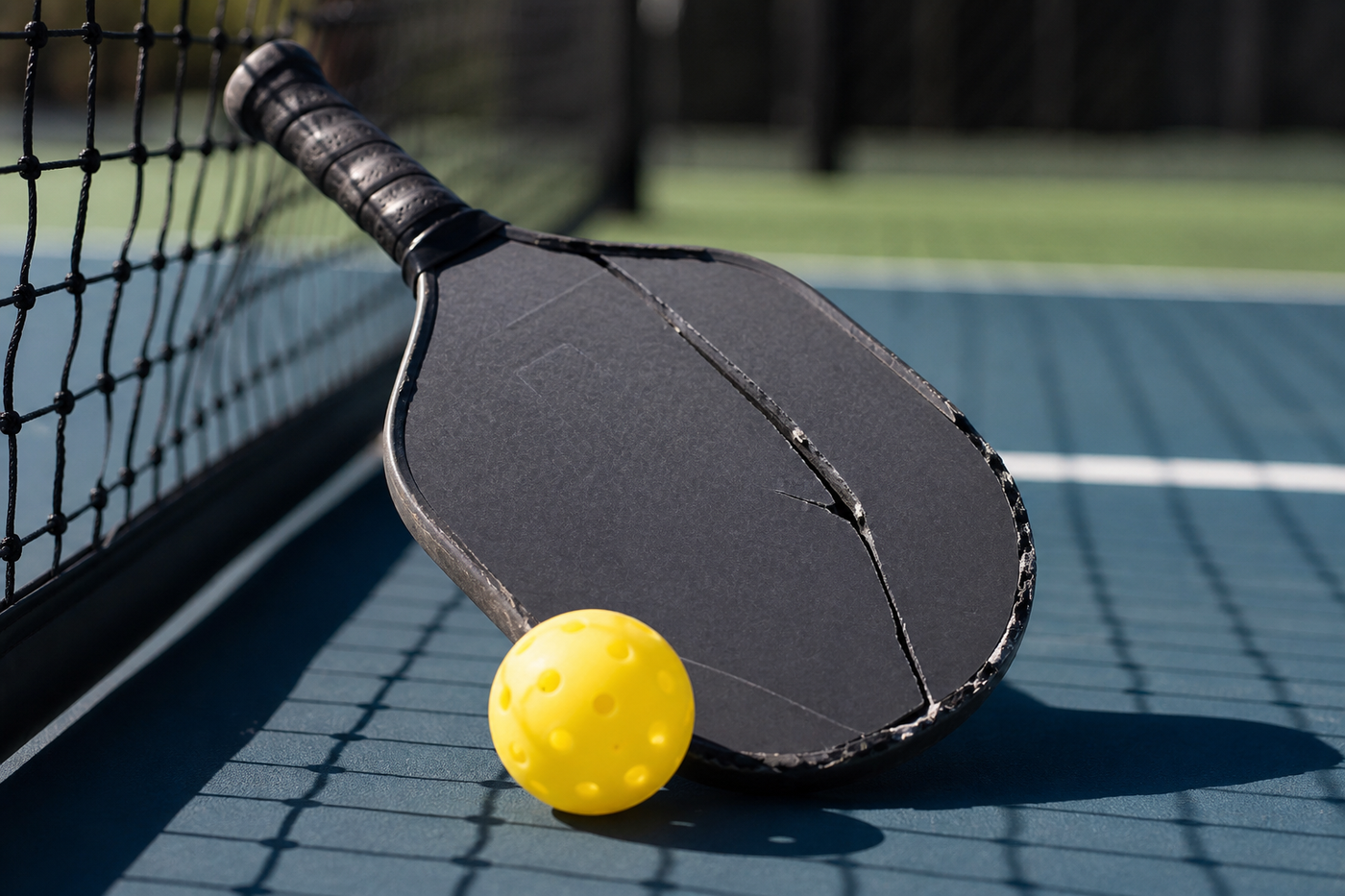
When to Replace a Pickleball Paddle: It Dies Before It Looks Dead
Working out when to replace a pickleball paddle is genuinely difficult, because a paddle almost never fails visibly. The face texture wears smooth and the honeycomb core slowly compresses, and both happen so gradually that you adapt to the decline instead of noticing it. Most players carry a dead paddle for months.
Short answer
A regularly played paddle lasts about one to two years. Replace it when your slice stops biting, your dinks start floating long, or the sound at contact goes dull and hollow. Those three come well before any visible crack.
The Seven Signs
1. Your slice stops biting
The clearest early signal. If a shot you have hit a thousand times suddenly sits up instead of skidding, the face texture is gone. Spin comes from surface grit, and grit wears flat.
2. Dinks float long
A fresh face grabs the ball and lets it drop. A worn one lets the ball slide off, so your usual dink carries an extra foot and lands in the attackable zone. If you find yourself aiming shorter than you used to, that is compensation.
3. The sound changes
A healthy paddle has a crisp, high pop. As the core compresses, that turns dull and hollow. Play alongside someone with the same model bought recently and the difference is obvious.
4. Dead spots on the face
Tap around the face with a knuckle and listen. A consistent tone means the core is intact. A patch that sounds flatter, or rattles slightly, means the honeycomb has collapsed there. That area will not return the ball properly again.
5. Visible cracks or a lifting edge guard
The obvious ones. A crack at the throat, where handle meets face, is structural and terminal. An edge guard peeling away lets grit and moisture into the core, which accelerates everything else.
6. The paddle got heavier
Rare but real. A cracked or unsealed edge lets water into the core, and a paddle that has gained weight has water in it. That one is not repairable.
7. You stopped trusting it
The least measurable and the most reliable. If you have started avoiding shots you used to attempt, your hands worked out what your eyes have not.
How Long Should a Paddle Actually Last?
How often you play |
Realistic lifespan |
|---|---|
Once or twice a month |
3+ years |
Once or twice a week |
1 to 2 years |
4+ times a week |
6 to 12 months |
Competitive, daily |
3 to 6 months |
Face material shifts these numbers. Fiberglass loses its texture fastest, carbon holds it longest, kevlar is the most abrasion-resistant of the three. The comparison sits in carbon fiber vs fiberglass vs kevlar.
What Actually Kills Paddles
- Heat. A car boot in summer is the single worst place to store a paddle. Heat softens the adhesive between face and core and can warp the whole thing. This is the most common avoidable death.
- Scraping the edge on court. Digging out low balls chews the edge guard, and once it lifts, the core is exposed.
- Paddle taps. Tapping paddles after a point is part of the sport, but tapping face-to-face rather than edge-to-edge grinds the texture off both.
- Damp storage. A sweaty paddle sealed in a bag overnight, repeatedly, works moisture into the seams.
How to Make One Last Longer
- Never leave it in a car. If you remember one thing, this is it.
- Wipe the face after every session with a slightly damp cloth, then dry it. Court dust is abrasive and grinds texture away between sessions.
- Use a cover. A neoprene paddle cover stops the face rubbing against everything else in your bag, which is where a lot of unexplained wear comes from.
- Refresh the edge guard. Edge tape costs a few euros and protects the most vulnerable part of the paddle.
- Re-grip before it goes slick. A slippery grip makes you squeeze harder, which changes your swing and loads your elbow. See grip size and replacement.
Do Not Replace for the Wrong Reason
A new paddle will not fix a technique problem. If your third-shot drops are inconsistent, that is a skill gap, and a $200 paddle will make it more expensive rather than better.
Equally, do not upgrade specs while replacing unless you meant to. Buying a lighter, thinner, more elongated paddle all at once means you cannot tell what changed. Replace like with like first, then adjust one spec at a time. The complete paddle buying guide works through them in order.
When it genuinely is time, the 16mm carbon range is where most players land, and the full collection covers the rest.
Frequently Asked Questions
How long does a pickleball paddle last?
Roughly one to two years for someone playing once or twice a week, and as little as three to six months for daily competitive play. Casual players can get three years or more.
How do I know if my paddle is dead?
Three early signs: your slice stops biting, your dinks float longer than they used to, and the sound at contact goes dull. Tapping around the face with a knuckle and listening for flat spots confirms core damage.
Can a pickleball paddle be repaired?
Edge guards and grips can be replaced. A cracked face, a crack at the throat, or a compressed core cannot be repaired in any way that restores performance.
Does leaving a paddle in the car damage it?
Yes, badly. Heat softens the adhesive bonding the face to the core and can warp the paddle. It is the most common avoidable cause of premature failure.
Should I replace my paddle or my grip first?
Grip first, always. It is far cheaper, it wears out several times faster than the paddle, and a slick grip changes your swing and loads your elbow.