-
Kevlar pickleball paddle: the material your game's been missing
I've been playing long enough to have opinions about paddle faces that I didn't ask for. Carbon fiber this, graphite that — every brand sounds like they're launching a satellite. But the first time I picked up a Kevlar paddle, something felt different. Not louder, not stiffer. Just... more honest. The ball went exactly where I meant to put it, and my elbow wasn't filing a complaint afterward. If you've been grinding through the differences between Kevlar and carbon fiber without a clear answer, you're in the right place. PickleballDoor builds its Kevlar pickleball paddle around a simple idea: the right face material changes everything, and most players haven't tried the right one yet.
What this paddle is made of and why it matters
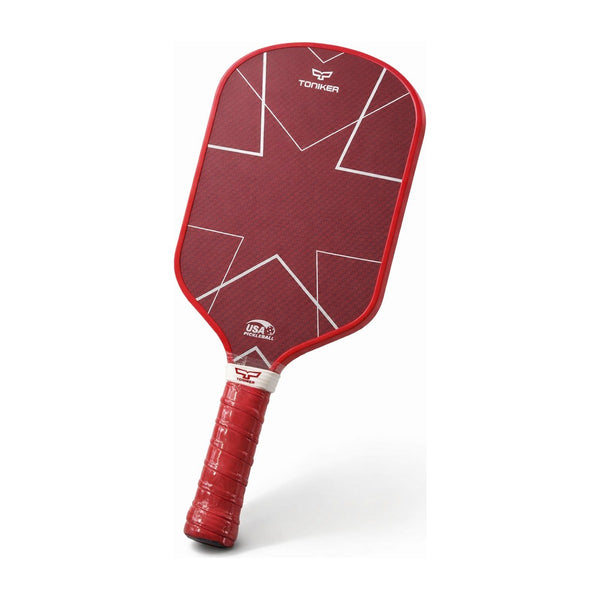
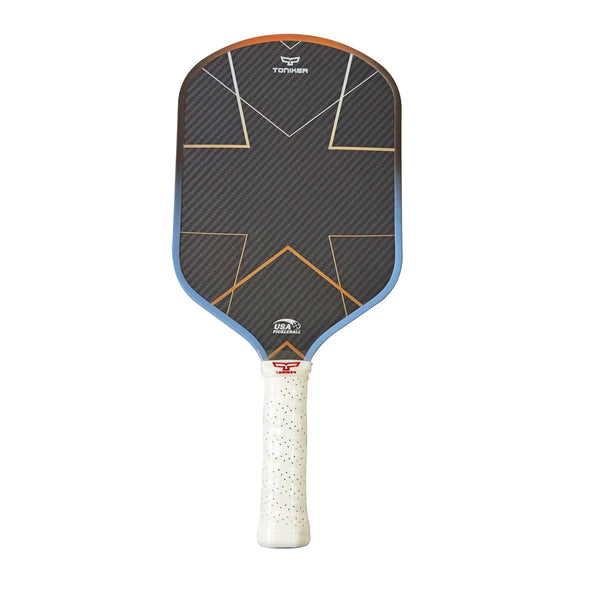
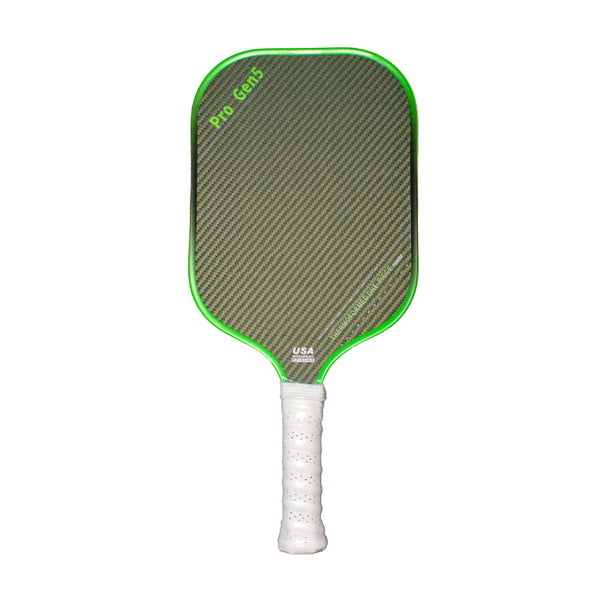
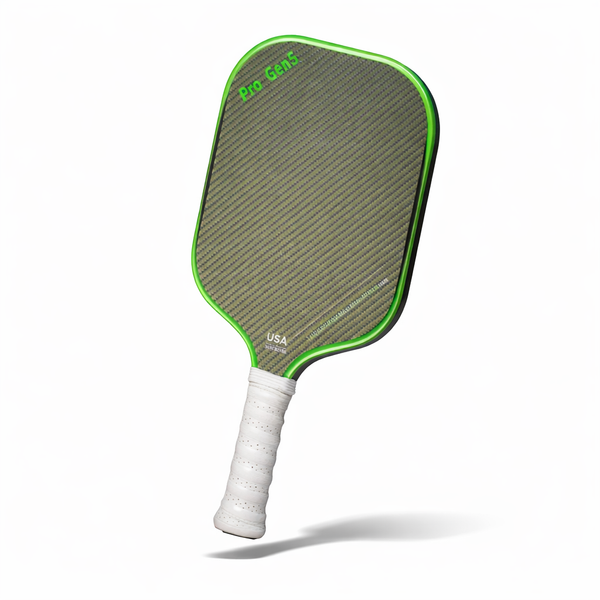
The PickleballDoor Kevlar pickleball paddle is built around an aramid fiber face — the same DuPont-engineered Kevlar® material used in aerospace applications and body armor. That's not a marketing line. Aramid fiber has a fundamentally different molecular structure than carbon fiber: it absorbs energy rather than deflecting it, which means less vibration at contact and more feel in your hand. The face is bonded to a polymer honeycomb core at 16mm thickness, giving you a swing weight that stays maneuverable without sacrificing stability on off-center hits.
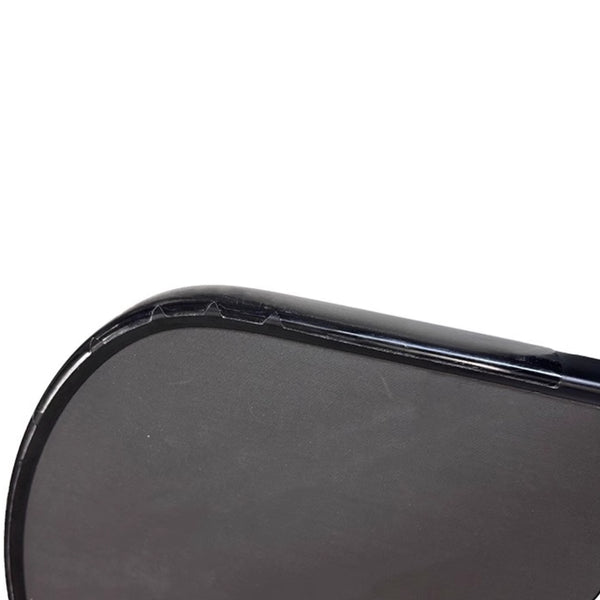
The exterior finish has a fine grit texture that grips the ball through contact — noticeably more than a standard carbon face. What I didn't expect was how that translates to spin rate. You're not just getting more ball rotation; you're getting more predictable ball rotation, which is a different thing entirely. The stitching on the edge guard is reinforced at stress points, and the resin layering between the aramid and core feels denser than comparable composite paddles I've used at this price. It doesn't feel like a paddle that's going to delaminate by spring.
Who this paddle is built for and when it's the right call
This paddle works best for intermediate to advanced players who prioritize feel and control without wanting to sacrifice power entirely — and for anyone who's developing elbow or wrist fatigue on a stiffer carbon fiber setup.
If you're a recreational player who plays two or three times a week and wants something forgiving on the arm without going full beginner-foam, this is a genuinely good choice. The sweet spot is wide enough that mis-hits don't punish you, and the paddle face gives you the kind of precise feedback that actually helps you improve your ball placement over time. Players who prioritize finesse — dinks, resets, third-shot drops — will feel immediately at home.
That said, if you're a pure power player who wants maximum rigidity and the aggressive pop of a thinner carbon fiber face, the Kevlar surface might feel slightly damped to you. The energy absorption that makes it easy on your elbow is the same property that softens the hardest drives. That's the honest tradeoff.
The paddle fits standard and most elongated shapes comfortably, and at its weight it slides easily into any pickleball bag pocket without throwing off your carry. It's also USA Pickleball approved, so you can take it to sanctioned play without a second thought. Gift buyers: this one reads as serious gear, not a filler present. A player at any skill level will understand immediately that they're holding something real.
How it compares to carbon fiber paddles and what you should know
The PickleballDoor Kevlar paddle sits in an interesting position in the market. Most high-performance options — CRBN's carbon fiber paddles, Selkirk's carbon and hybrid lines, what you'll find at Pickleball Central in the $80–$150 range — lean hard into stiffness and rigidity as selling points. That works well for players who want explosive power and are fine with a firmer feel. Carbon fiber paddles also tend to produce a slightly higher-pitched contact sound that a lot of competitive players associate with quality.
Here's where the comparison gets real: the Kevlar paddle gives up a small amount of raw power compared to the stiffest carbon fiber options. If you're swinging for winners from the baseline all day, you might miss that extra forceful response. That's the one genuine weakness — it's not the wrong choice, but it's worth knowing going in.
Where PickleballDoor wins is durability and playing experience over time. Kevlar and carbon fiber age differently. Aramid fiber maintains its strength and resilience through repeated impact in a way that carbon face paddles — which can develop micro-fractures and surface wear — sometimes don't. The grit holds longer. The responsiveness stays consistent. After 4 months of regular play, a Kevlar surface still provides the same feel it did out of the packaging. The Gen 3 construction here is also meaningfully better than big-box options: Walmart's composite paddles at similar prices use polyester or fiberglass layering that simply doesn't perform the same way under pressure.
Who's actually buying this and what they're saying at the courts
Right now, the players buying the PickleballDoor Kevlar paddle fall into a few clear groups. There's the semi-competitive player who got tennis elbow last season and is done experimenting. There's the 3.5-to-4.0 player who's watched enough YouTube to know what aramid fiber means and wants to try it without spending $200 on a boutique brand. And there's the person buying it as a gift for someone who plays three mornings a week and deserves something better than what's been sitting in the garage.
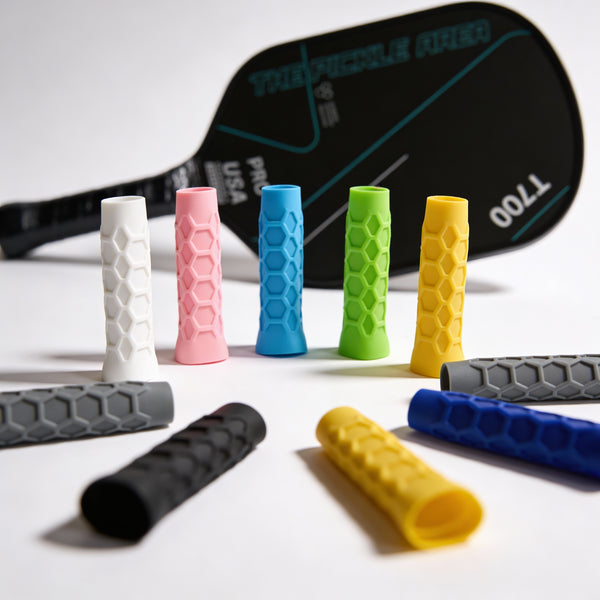
Picture this: end of a session, parking lot conversation, someone pulls out a paddle that looks a little different. Someone else asks about it. That's the Kevlar paddle conversation. It doesn't look flashy, but it plays in a way that makes people curious. Players who've used it tend to describe the same thing — a backhand reset that actually lands soft, a dink that goes where it's supposed to, a playing session that didn't wreck their elbow. Protecting your gear matters, but so does choosing gear worth protecting. The players buying this have figured out that the right pickleball accessories aren't about status — they're about playing the way you actually want to play.
The honest verdict
A Kevlar pickleball paddle isn't for everyone — and it doesn't need to be. If you want feel over firepower, durability over flash, and a face material that's actually engineered to perform rather than just marketed that way, this is a straightforward decision. The DuPont aramid construction, the 16mm polymer core, the spin rate that holds up over months of play — it all adds up to something that's hard to go back from once you've tried it.
Popular colors and grip configurations do move, so if you've landed on this page after months of sitting on the decision, it's worth checking current stock before someone else grabs your size. No hard sell — just experience talking.
-
Domestic shipping can take up to 5 business days.
Foreign shipping could take up to 14 business days.
Due to global supply chain challenges, shipping times could be longer than usual. -
All our products are subject to quality control.
Our warranty provides a guarantee against manufacturer defects.
The guarantee covers any manufacturing, design, or material defect. Please notify us within 1 month of noticing any defects.
It does not cover blows, improper use, or other issues that are not attributable to a manufacturer defects.
-
Yes, we offer full and partial refunds.
Please enquire for more information about our Refund policy. -
Kevlar pickleball paddle: the material your game's been missing
I've been playing long enough to have opinions about paddle faces that I didn't ask for. Carbon fiber this, graphite that — every brand sounds like they're launching a satellite. But the first time I picked up a Kevlar paddle, something felt different. Not louder, not stiffer. Just... more honest. The ball went exactly where I meant to put it, and my elbow wasn't filing a complaint afterward. If you've been grinding through the differences between Kevlar and carbon fiber without a clear answer, you're in the right place. PickleballDoor builds its Kevlar pickleball paddle around a simple idea: the right face material changes everything, and most players haven't tried the right one yet.
What this paddle is made of and why it matters
The PickleballDoor Kevlar pickleball paddle is built around an aramid fiber face — the same DuPont-engineered Kevlar® material used in aerospace applications and body armor. That's not a marketing line. Aramid fiber has a fundamentally different molecular structure than carbon fiber: it absorbs energy rather than deflecting it, which means less vibration at contact and more feel in your hand. The face is bonded to a polymer honeycomb core at 16mm thickness, giving you a swing weight that stays maneuverable without sacrificing stability on off-center hits.
The exterior finish has a fine grit texture that grips the ball through contact — noticeably more than a standard carbon face. What I didn't expect was how that translates to spin rate. You're not just getting more ball rotation; you're getting more predictable ball rotation, which is a different thing entirely. The stitching on the edge guard is reinforced at stress points, and the resin layering between the aramid and core feels denser than comparable composite paddles I've used at this price. It doesn't feel like a paddle that's going to delaminate by spring.
Who this paddle is built for and when it's the right call
This paddle works best for intermediate to advanced players who prioritize feel and control without wanting to sacrifice power entirely — and for anyone who's developing elbow or wrist fatigue on a stiffer carbon fiber setup.
If you're a recreational player who plays two or three times a week and wants something forgiving on the arm without going full beginner-foam, this is a genuinely good choice. The sweet spot is wide enough that mis-hits don't punish you, and the paddle face gives you the kind of precise feedback that actually helps you improve your ball placement over time. Players who prioritize finesse — dinks, resets, third-shot drops — will feel immediately at home.
That said, if you're a pure power player who wants maximum rigidity and the aggressive pop of a thinner carbon fiber face, the Kevlar surface might feel slightly damped to you. The energy absorption that makes it easy on your elbow is the same property that softens the hardest drives. That's the honest tradeoff.
The paddle fits standard and most elongated shapes comfortably, and at its weight it slides easily into any pickleball bag pocket without throwing off your carry. It's also USA Pickleball approved, so you can take it to sanctioned play without a second thought. Gift buyers: this one reads as serious gear, not a filler present. A player at any skill level will understand immediately that they're holding something real.
How it compares to carbon fiber paddles and what you should know
The PickleballDoor Kevlar paddle sits in an interesting position in the market. Most high-performance options — CRBN's carbon fiber paddles, Selkirk's carbon and hybrid lines, what you'll find at Pickleball Central in the $80–$150 range — lean hard into stiffness and rigidity as selling points. That works well for players who want explosive power and are fine with a firmer feel. Carbon fiber paddles also tend to produce a slightly higher-pitched contact sound that a lot of competitive players associate with quality.
Here's where the comparison gets real: the Kevlar paddle gives up a small amount of raw power compared to the stiffest carbon fiber options. If you're swinging for winners from the baseline all day, you might miss that extra forceful response. That's the one genuine weakness — it's not the wrong choice, but it's worth knowing going in.
Where PickleballDoor wins is durability and playing experience over time. Kevlar and carbon fiber age differently. Aramid fiber maintains its strength and resilience through repeated impact in a way that carbon face paddles — which can develop micro-fractures and surface wear — sometimes don't. The grit holds longer. The responsiveness stays consistent. After 4 months of regular play, a Kevlar surface still provides the same feel it did out of the packaging. The Gen 3 construction here is also meaningfully better than big-box options: Walmart's composite paddles at similar prices use polyester or fiberglass layering that simply doesn't perform the same way under pressure.
Who's actually buying this and what they're saying at the courts
Right now, the players buying the PickleballDoor Kevlar paddle fall into a few clear groups. There's the semi-competitive player who got tennis elbow last season and is done experimenting. There's the 3.5-to-4.0 player who's watched enough YouTube to know what aramid fiber means and wants to try it without spending $200 on a boutique brand. And there's the person buying it as a gift for someone who plays three mornings a week and deserves something better than what's been sitting in the garage.
Picture this: end of a session, parking lot conversation, someone pulls out a paddle that looks a little different. Someone else asks about it. That's the Kevlar paddle conversation. It doesn't look flashy, but it plays in a way that makes people curious. Players who've used it tend to describe the same thing — a backhand reset that actually lands soft, a dink that goes where it's supposed to, a playing session that didn't wreck their elbow. Protecting your gear matters, but so does choosing gear worth protecting. The players buying this have figured out that the right pickleball accessories aren't about status — they're about playing the way you actually want to play.
The honest verdict
A Kevlar pickleball paddle isn't for everyone — and it doesn't need to be. If you want feel over firepower, durability over flash, and a face material that's actually engineered to perform rather than just marketed that way, this is a straightforward decision. The DuPont aramid construction, the 16mm polymer core, the spin rate that holds up over months of play — it all adds up to something that's hard to go back from once you've tried it.
Popular colors and grip configurations do move, so if you've landed on this page after months of sitting on the decision, it's worth checking current stock before someone else grabs your size. No hard sell — just experience talking.