Pickleball Paddle Shapes: Elongated vs Standard vs Widebody
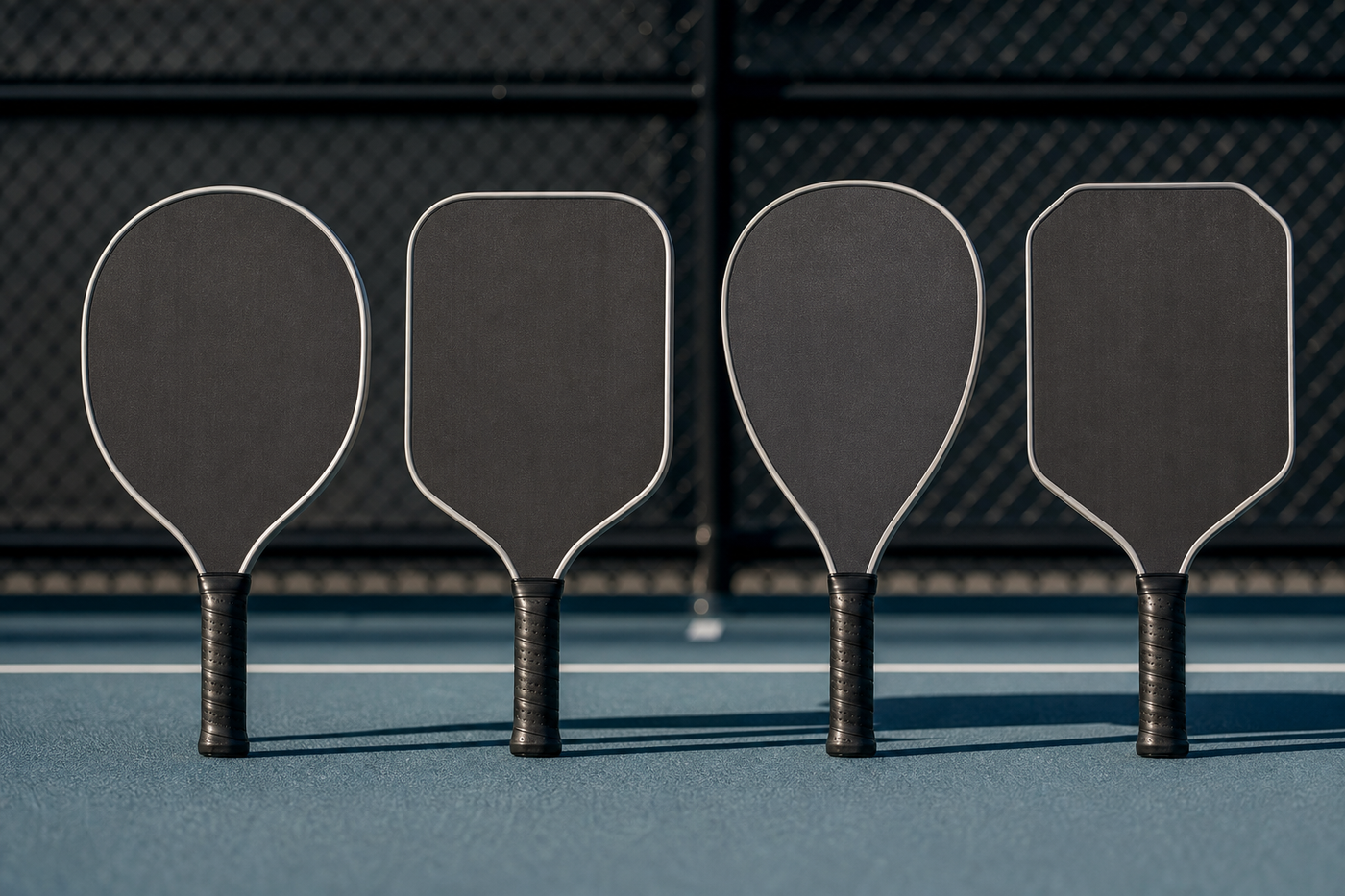
Pickleball Paddle Shapes: Every Shape Spends the Same Budget Differently
All legal pickleball paddle shapes live inside one rule: 17 inches maximum length, and length plus width no more than 24 inches. That fixed budget is why shape is a genuine trade rather than an upgrade. Every inch of reach you add at the top is an inch of width you lose at the sides, and width is where forgiveness lives.
Short answer
Standard is the right default. Choose elongated if you play singles or want reach and leverage and you already make clean contact. Choose widebody if you are starting out, coming back from injury, or you mishit more than you would like.
The Three Shapes
Shape |
Rough size |
Sweet spot |
Best for |
|---|---|---|---|
Widebody |
15.5 x 8.25 in |
Widest, lowest on the face |
Beginners, net play, returning from injury |
Standard |
16 x 8 in |
Balanced and central |
Most doubles and all-court players |
Elongated |
16.5 x 7.5 in |
Narrower, higher on the face |
Singles, drivers, two-handed backhands |
Where the Sweet Spot Moves, and Why It Matters
The sweet spot is not just smaller on an elongated paddle. It also sits higher up the face, because the extra length pushes the balance point away from your hand.
That has a practical consequence nobody warns beginners about: if you learned to hit in the middle of a standard paddle and you switch to elongated, your usual contact point is now below the sweet spot. Shots feel dead and you will assume the paddle is bad. It is not, your contact point simply moved.
Widebody does the opposite. The sweet spot is wide and sits low, close to the throat, which is exactly where nervous players tend to make contact.
Reach: Real, but Smaller Than You Think
An elongated paddle typically gives about half an inch more reach than a standard one. Half an inch is not nothing at full stretch, but it is far less than the marketing implies, and you pay for it three ways: a narrower sweet spot, a higher swing weight, and slower hands at the net.
In doubles, where most points end in a kitchen exchange, that trade usually loses. In singles, where you cover the full court alone, it usually wins.
Shape Changes How Heavy a Paddle Feels
Two paddles at 8.0 oz will not feel the same if one is elongated. Moving mass further from your hand raises swing weight, so an elongated paddle feels heavier in motion even at identical static weight.
If an elongated paddle appeals but feels sluggish, the fix is usually a counterweight in the handle rather than a lighter paddle. We cover that in pickleball paddle weight.
Handle Length Travels With Shape
Elongated paddles usually pair a longer handle, 5.5 inches or more, with the longer face. That is good news if you hit a two-handed backhand and bad news if you like to choke up on the handle, because a long handle eats into face length.
Widebody paddles tend toward shorter handles, around 4.5 to 5 inches, which suits one-handed play and quick hand switches. Check handle length alongside grip size, since the two together decide whether the handle actually fits how you play.
How to Choose Without Guessing
- Count your mishits. If shots regularly come off the edge or feel dead, you need width, not reach.
- Doubles or singles? Doubles rewards hand speed and forgiveness, singles rewards reach and leverage.
- Two-handed backhand? You need a longer handle, which usually means elongated.
- Still improving? Standard or widebody. Buy for the game you have, then move to elongated when your contact is repeatable.
Shape is the spec where players most often buy aspirationally. An elongated paddle punishes mishits, and if you are mishitting, it will make your results worse while feeling like a more serious paddle.
What We Stock and Why
Most of our paddle range sits in standard and lightly elongated shapes, because that is where the widest set of players get a usable sweet spot without giving up hand speed. The Dragon Slayer leans longer for players who want reach and drive; the 16mm carbon range stays closer to standard. If you are still deciding across all five specs, start from the complete paddle buying guide.
Frequently Asked Questions
What is the best pickleball paddle shape for beginners?
Standard or widebody. Both keep the sweet spot wide and low on the face, which is where less experienced players tend to make contact, so mishits still stay in play.
Is an elongated pickleball paddle better?
Only for the right player. It adds roughly half an inch of reach and more leverage on drives, but narrows the sweet spot, raises swing weight and slows your hands at the net. It suits singles and confident hitters.
How long can a pickleball paddle legally be?
17 inches maximum, and length plus width cannot exceed 24 inches. The edge guard is included in the measurement, so there is no tolerance for being fractionally over.
Does paddle shape change how heavy it feels?
Yes. Moving mass further from your hand raises swing weight, so an elongated paddle feels heavier in motion than a standard paddle of identical static weight.
Which shape is best for a two-handed backhand?
Elongated, because it usually carries a handle of 5.5 inches or more. Check the stated handle length rather than assuming, since it varies between models.