Why 40% of Pickleball Paddles Fail UPA-A Testing (Real Reasons)
Short Answer
Around 40% of pickleball paddles fail UPA-A testing because they exceed power limits, change performance after break-in, or don't meet strict size and durability standards.
Introduction
Why do so many pickleball paddles fail UPA-A certification? The short answer: the standards are far stricter than most manufacturers expect.
During the 2025 testing cycle, nearly 40% of paddles that already passed USA Pickleball approval failed UPA-A testing. That's a massive gap, and it reveals how demanding modern certification has become.
In this guide, we break down the real reasons behind these failures and what they mean for players and paddle design.

The 40% Failure Rate Explained
At first glance, a 40% failure rate sounds extreme. But when you look at how UPA-A tests paddles, it starts to make sense.
Most paddles are designed to pass initial approval tests. However, UPA-A goes further by evaluating how paddles behave after simulated use, under pressure, and within strict performance limits.
This means manufacturers aren't just designing for compliance, they're designing for durability, consistency, and long-term control.
👉 UPA-A vs USA Pickleball differences
Reason #1: Too Much Power (PEF Limit)
One of the biggest reasons paddles fail is exceeding the Paddle Efficiency Factor (PEF).
PEF measures how efficiently a paddle transfers energy to the ball. In simple terms: higher PEF means more power.
UPA-A sets a strict limit (0.405 after break-in). Many paddles:
- pass before use
- fail after testing
Why? Because materials like carbon fiber can become more reactive over time. The differences between face materials are covered in carbon fiber vs fiberglass vs kevlar.
Manufacturers often push power to stay competitive, but that can backfire during certification.
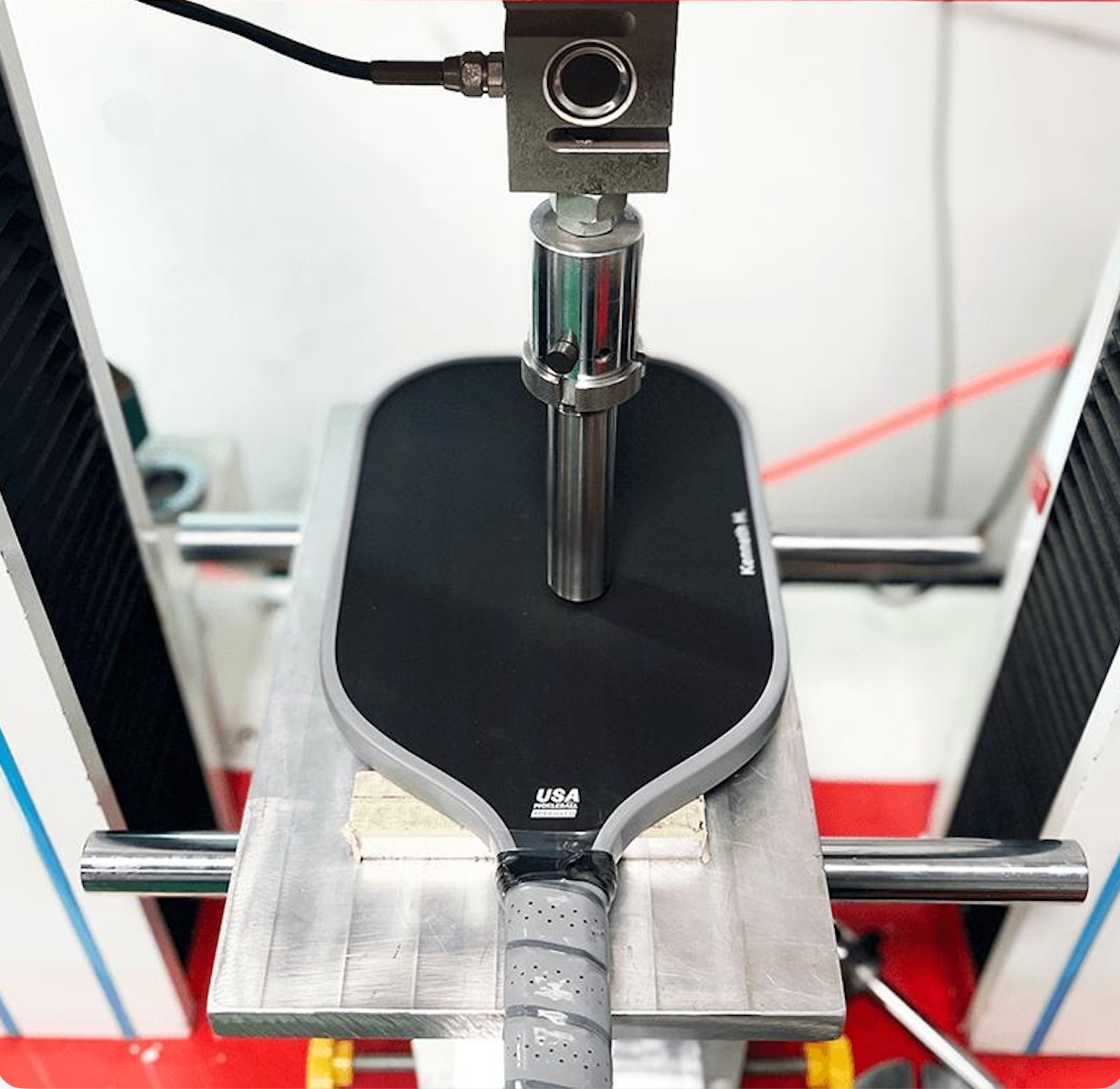
Reason #2: Break-In Effects (ABI Testing)
UPA-A uses a process called Accelerated Break-In (ABI).
This simulates real gameplay by compressing the paddle repeatedly. The goal is to test how the paddle evolves over time.
Here's the problem:
- Some paddles gain power after break-in
- Others lose structural consistency
- Some become non-compliant entirely
This is something traditional certifications don't fully test, and it hits one construction type hardest, as we explain in thermoformed paddles explained.
👉 UPA-A certification process explained
Reason #3: Size and Shape Violations
Even small measurement issues can cause failure.
UPA-A enforces strict limits:
- Max length: 17 inches
- Max combined dimensions: 24 inches
There's no tolerance for "almost compliant."
Some paddles fail because:
- edge guards add extra size
- manufacturing inconsistencies
- design pushes limits too far
Precision matters at every level. How that 24 inch budget gets spent is the subject of paddle shapes.
Reason #4: Durability and Material Issues
Durability is another hidden failure point.
UPA-A doesn't just test performance, it checks if a paddle maintains that performance under stress.
Common issues:
- surface degradation
- core compression
- inconsistent rebound
Materials like kevlar, carbon fiber, and composite cores behave differently under stress, which makes consistency harder to maintain.
What This Means for Players
For players, this failure rate actually reveals something important: not all paddles are built equally.
Even if a paddle:
- feels powerful
- is widely marketed
- carries basic approval
…it might not meet stricter standards.
For competitive players, this matters because:
- using a non-compliant paddle can disqualify you
- performance may change over time
- consistency becomes a key advantage
If you are choosing your next paddle around these standards, our 16mm carbon fiber paddle collection is built around the same core specs certification actually measures, and the complete paddle buying guide walks through all five.
What This Means for Manufacturers
For brands, the stakes are high.
Certification costs include:
- annual fees
- per-model testing
- re-submission costs
Failing once means redesign, retesting and more cost.
This is why premium paddles often come with higher price tags: certification is built into the cost.
👉 Paddle certification cost breakdown
Key Takeaways
- Around 40% of paddles fail UPA-A testing
- The main reasons are power limits, break-in effects, and strict dimensions
- UPA-A testing is far stricter than basic approval systems
- Performance over time matters more than initial performance
- Players benefit from understanding these standards
Conclusion
The 40% failure rate isn't a flaw in the system, it's proof that standards are getting higher.
UPA-A certification is designed to ensure fairness, consistency, and control in competitive pickleball. And that means not every paddle makes the cut.
For players, understanding why paddles fail gives you a real advantage. It helps you choose better equipment, avoid surprises, and play with confidence, whether you're competing or just improving your game.
FAQ
Why do so many paddles fail UPA-A testing?
Because the testing includes break-in simulation and strict power limits that many paddles exceed after use.
Do all paddles gain power over time?
Not all, but many high-performance paddles become more reactive after repeated use.
Is failing UPA-A testing common?
Yes, especially for paddles designed primarily for power rather than control.
Should recreational players care about this?
Not necessarily, but understanding these factors helps you choose a more durable and consistent paddle.